Chapter 1 Notes
Economic Way of Thinking
Ex. List 4-5 things you can do today after school.
Choose 2 you are most likely to do.
For each alternative there is a “trade-off”
All theses items have an opportunity cost also opportunity
lost = what you lose by making
a particular choice. Opportunity benefit is what you gain. The reason why
one has to make choices is because of scarcity. There are not enough
resources for everything. Resources can be time, money, natural resources, etc.
We have limited resources but limited desires.
Economics is the study of resource allocation.
Economics helps us analyze and perhaps predict what decisions people
might make.
Decisions you make should have greater opportunity benefit than opportunity cost. There should be more benefits than costs.
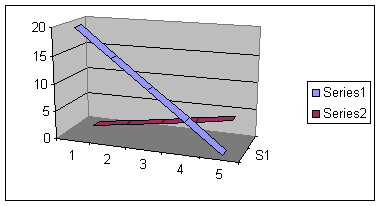
Cost matrix
$40 total income
$2 Video rental 20 15 10 5 0
$10 Buy CD 0 1 2 3 4
See Excel – Production Possibilities Curve (book 1, sheet 1)
Guns and Butter production possibilities curve
(military vs. consumer goods)
Every country must answer the three basic economic questions:
How a country answers these questions determines the type of economy
4 types of economy
Microeconomics (small) – individual people, individual firm, individual industry
Macroeconomics (big/whole) – all people, all firms, all industries